Getting there: train and timing
From Pisa Centrale regional trains to Lucca run every 30–60 minutes; the ride takes about half an hour through Tuscan countryside. Tickets stay cheap online or at the platform. Lucca station sits outside the walls yet ten minutes on foot from the centre — no taxi needed unless heavy luggage.
Leave by 9 am for a full morning. See our getting around from Pisa guide for bus links if you stay far from the station. A apartment near Pisa Centrale simplifies early departure and evening return.
To deepen Lucca beyond a quick visit, read our full Lucca guide covering museums, concerts and green outskirts a day trip cannot fully include.
Day trips from Pisa work best with a fixed base: no nightly repacking, more energy to explore.
Book online when possible and wear comfortable shoes: cobbles and trails need proper soles, not fashion.
Sleeping again in Pisa keeps your stay coherent: same kitchen, same balcony, new stories for dinner.
Day trips from Pisa work best with a fixed base: no nightly repacking, more energy to explore.
Book online when possible and wear comfortable shoes: cobbles and trails need proper soles, not fashion.
Walls and views: walking above the city
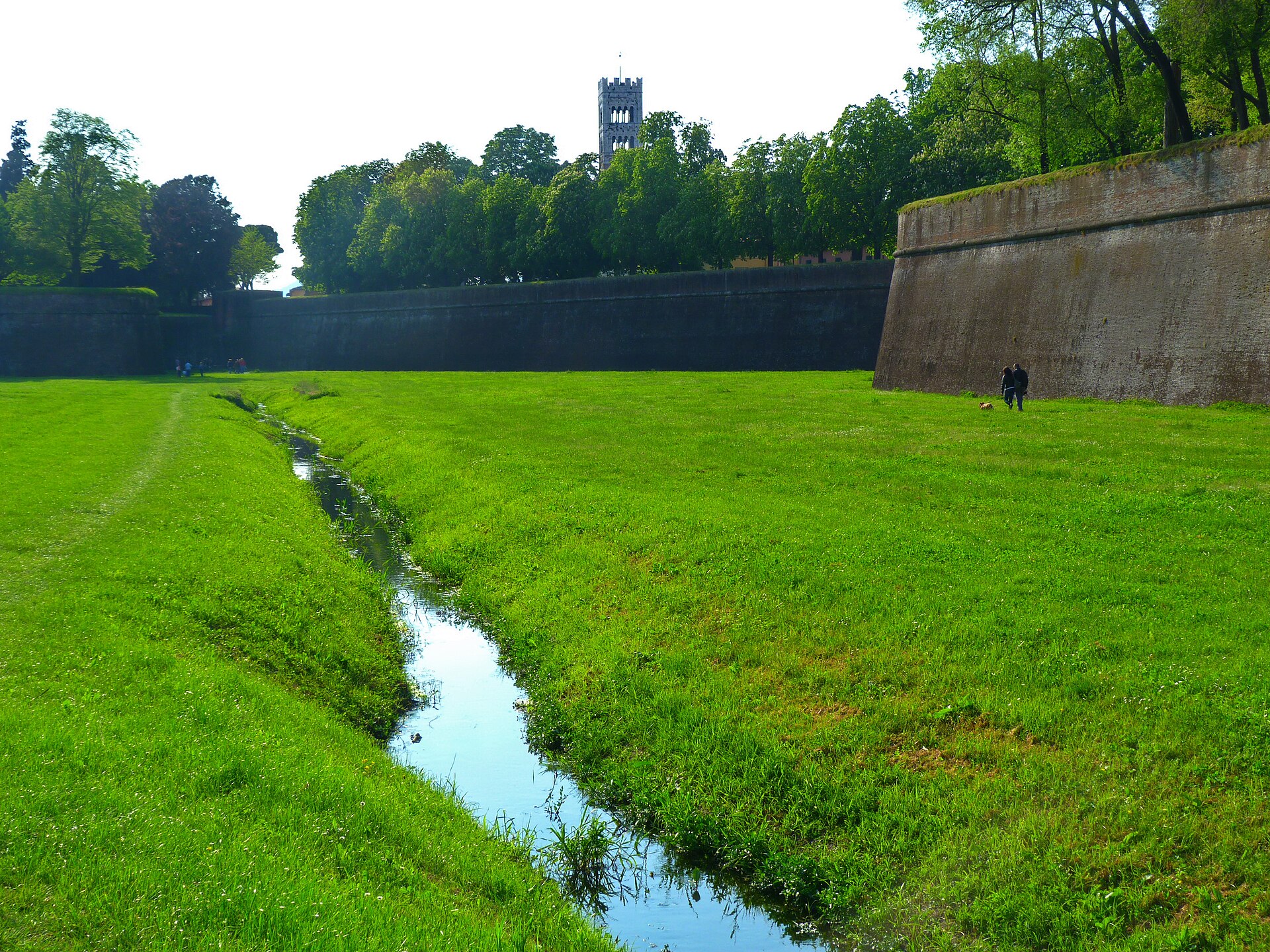
Lucca's Renaissance walls form a four-kilometre pedestrian and cycle ring, shaded by plane trees and overlooking private gardens and bell towers. Walking the walls is mandatory for at least one stretch: it gives perspective and shows why Lucca is called a «livable art city».
Rent bikes in the piazza: half a day completes the ring with photo stops. On foot, pick a quadrant and descend into the centre through historic gates. Porta San Pietro and Porta Elisa offer scenic entries.
Spring and autumn ideal; summer bring water and hat — little shade on walls. Winter offers low light and romantic mist, perfect for crowd-free photos.
Photograph tickets and schedules: evening return is calmer when you know your train.
Avoid turning every outing into an Instagram checklist: Tuscany rewards those who sit, watch and chat with baristas, drivers and market sellers.
Western Tuscany moves differently from Florence: fewer queues, more silence, baristas remembering your order on day two.
Photograph tickets and schedules: evening return is calmer when you know your train.
Historic centre: towers, piazzas and shops
Guinigi Tower with rooftop holm oaks is the absolute symbol: a tiring climb but views that compensate. Piazza dell'Anfiteatro follows the Roman arena ellipse; cafés and shops trace its curve. The cathedral holds the Volto Santo and sober Tuscan Gothic.
Lucca is not a frozen museum: a living city with schools, offices and market. Slip into lanes parallel to Via Fillungo for artisans and bookshops. On return Pisa will feel more open and university-driven; Lucca more compact and bourgeois.
Do not try to see everything: pick two monuments and wander freely for the rest. Trip quality lies in rhythm, not tick-lists.
Always cross-check timetables — summer and winter differ greatly in Tuscany.
Keep tickets and timetables on your phone plus an offline screenshot: mobile signal fails in pine forest and hill towns.
Photograph but leave room for surprise: a lane, a market, a scent may become the main memory.
Always cross-check timetables — summer and winter differ greatly in Tuscany.
Lunch, gelato and return to Pisa
Lunch inside walls: trattorie with fixed Tuscan menus, Lucchese tordelli, farro soup in autumn. Book on Sunday. Artisan gelato in Piazza dell'Anfiteatro sweetly closes the day.
Last evening train: check schedule before dinner to avoid rushing. Returning to sleep in Pisa keeps your holiday flow without repacking.
Lucca from Pisa is a formative trip: you grasp Tuscany beyond the Leaning Tower and return with energy for a Lungarno aperitivo.
Pisa works as a perfect hub because Tuscan distances are measured in hours, not full days: morning train, slow exploration, evening return with energy for a Lungarno stroll.
Travelling with children, plan gelato breaks and lawns: trip quality is measured in humanity, not monuments ticked.
Always ask «what would you do on Sunday?» at the bar or host: answers beat any printed guide.
Pisa works as a perfect hub because Tuscan distances are measured in hours, not full days: morning train, slow exploration, evening return with energy for a Lungarno stroll.
In summary
Lucca from Pisa is a classic day trip: frequent trains, compact centre, walkable walls. Leave early and wander without a fixed target.
- Train Pisa Centrale–Lucca: about 30 minutes.
- First: climb the walls to orient.
- Lunch inside walls; book ahead on Sunday.
- Afternoon: Guinigi, cathedral and lanes.
- Last evening train to avoid rushing.